
Syria tourist attractions are among the most historically rich and culturally significant sites in the world. Travelers often ask: What are the most important Syria tourist attractions to visit? This guide answers that question in detail. It explains the top Syria tourist attractions, highlights UNESCO heritage sites, and shows why Syria tourist attractions continue to attract historians, photographers, and cultural travelers.
If you are researching Syria tourist attractions for academic, cultural, or future travel purposes, this article provides a structured overview. Moreover, it follows SEO best practices with a strong focus on the keyphrase “Syria tourist attractions.”
Why Are Syria Tourist Attractions So Famous?
Syria tourist attractions are famous because Syria stands at the crossroads of civilizations. For thousands of years, empires such as the Romans, Byzantines, Umayyads, and Ottomans shaped the land.
In fact, Syria tourist attractions include some of the oldest continuously inhabited cities in the world. Additionally, many Syria tourist attractions are listed by UNESCO as World Heritage Sites.
Historic mosques, Crusader castles, Roman theaters, and ancient souks all form part of Syria tourist attractions. Therefore, history lovers consider Syria tourist attractions a living open-air museum.
1. Umayyad Mosque – A Religious Masterpiece
One of the most important Syria tourist attractions is the Umayyad Mosque in Damascus. Built in the 8th century, it remains one of the oldest and largest mosques in the world.
This landmark represents early Islamic architecture at its finest. Furthermore, it stands in the heart of Damascus, itself one of the key Syria tourist attractions. Visitors admire its mosaics, vast courtyard, and spiritual significance.
Among Syria tourist attractions, this mosque symbolizes religious coexistence and architectural brilliance.
2. Palmyra – The Desert Jewel
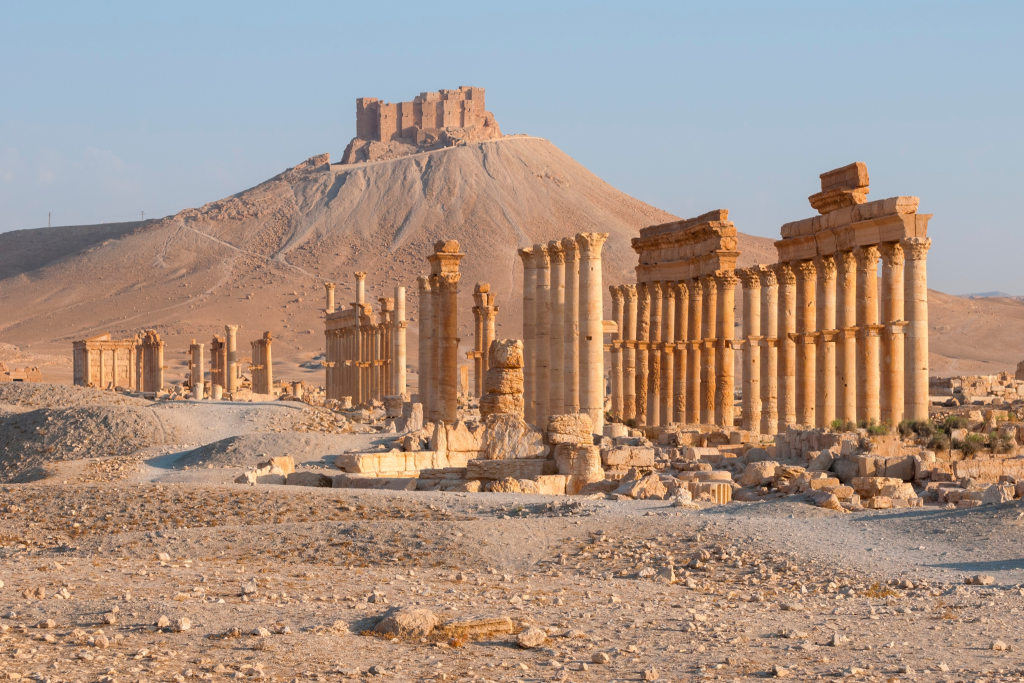
When discussing Syria tourist attractions, Palmyra always appears at the top of the list. This ancient city once connected the Roman Empire with Persia and Asia.
Columns stretch across the desert landscape. The Temple of Bel and the Roman theater once defined Palmyra’s skyline. Although parts suffered destruction, Palmyra remains one of the most iconic Syria tourist attractions.
Scholars worldwide study Palmyra as one of the most important Syria tourist attractions of the classical world.
3. Citadel of Aleppo – A Fortress Above the City
The Citadel of Aleppo dominates the skyline of Aleppo. This massive medieval fortress is among the most dramatic Syria tourist attractions.
Built on a hill used since ancient times, the citadel showcases Islamic military architecture. Massive stone walls, gates, and towers define this structure. As a result, the Citadel of Aleppo stands among the most photographed Syria tourist attractions.
4. Krak des Chevaliers – A Crusader Castle
Syria tourist attractions also include impressive Crusader castles. Krak des Chevaliers is one of the best-preserved medieval castles in the world.
Located near Homs, this fortress demonstrates European military engineering in the Middle East. Thick walls and strategic towers highlight why this site ranks high among Syria tourist attractions.
Because of its condition and scale, historians consider it one of the most significant Syria tourist attractions related to the Crusades.
5. Bosra – Roman Grandeur
Bosra is another UNESCO-listed highlight among Syria tourist attractions. Its Roman theater is remarkably well preserved.
Constructed from black basalt stone, the theater could seat thousands. Today, it represents one of the finest Roman-era Syria tourist attractions.
Travel experts often list Bosra as a must-see among Syria tourist attractions for archaeology enthusiasts.
6. Old City of Damascus – A Living History
The Old City of Damascus is central to Syria tourist attractions. Narrow alleys, ancient churches, historic homes, and bustling markets define this area.
Importantly, the Old City reflects layers of Aramean, Roman, Byzantine, and Islamic history. Consequently, it remains one of the most culturally rich Syria tourist attractions.
Visitors exploring Syria tourist attractions often start here.
7. Old City of Aleppo – A Cultural Treasure
Before recent conflicts, the Old City of Aleppo ranked among the most vibrant Syria tourist attractions. Traditional markets, known as souks, stretched for kilometers.
Although restoration continues, the Old City remains historically significant among Syria tourist attractions.
8. Apamea – The Great Colonnade
Apamea features a long Roman colonnaded street. Thousands of columns once lined this grand avenue.
As part of Syria tourist attractions, Apamea demonstrates urban planning in the Roman East. Archaeologists frequently cite it when discussing Syria tourist attractions of the Roman era.
9. Hama Waterwheels – Engineering Heritage
The wooden waterwheels of Hama are unique Syria tourist attractions. Known as norias, these giant wheels once lifted water from the Orontes River.
Unlike ancient ruins, these Syria tourist attractions showcase medieval hydraulic engineering. Their sound and movement create a memorable cultural experience.
10. Dead Cities – Forgotten Settlements
The Dead Cities consist of hundreds of abandoned Byzantine settlements. These archaeological remains represent rural life from late antiquity.
As Syria tourist attractions, they offer insight into early Christian communities. Historians view them as essential Syria tourist attractions for understanding regional history.
Are Syria Tourist Attractions Safe to Visit?
One of the most frequently asked questions about Syria tourist attractions concerns safety. Conditions vary depending on the region and political developments.
Travel advisories from governments and international organizations should always be reviewed. For updated information, consult official travel advice from your country’s foreign ministry or organizations such as World Tourism Organization.
Before planning a visit to Syria tourist attractions, thorough research is essential.
Cultural Importance of Syria Tourist Attractions
Syria tourist attractions represent more than monuments. They reflect thousands of years of religious, artistic, and scientific achievements.
For example, Islamic architecture at the Umayyad Mosque influenced structures across the Muslim world. Similarly, Roman Syria tourist attractions demonstrate imperial engineering.
Because of this layered history, Syria tourist attractions attract archaeologists, historians, and cultural researchers worldwide.
Syria Tourist Attractions and UNESCO World Heritage Sites
Many Syria tourist attractions are officially recognized by UNESCO. These include:
- Ancient City of Damascus
- Ancient City of Aleppo
- Palmyra
- Krak des Chevaliers
- Bosra
You can review the official UNESCO listings through the UNESCO World Heritage Centre website (https://whc.unesco.org) for detailed documentation and preservation updates.
Recognition by UNESCO strengthens the global importance of Syria tourist attractions.
Best Time to Explore Syria Tourist Attractions
Climate plays an important role when exploring Syria tourist attractions. Spring and autumn offer moderate temperatures.
Summer heat can be intense, especially at desert Syria tourist attractions like Palmyra. Winter may bring cooler temperatures in northern regions.
Therefore, planning around seasonal weather improves the experience of visiting Syria tourist attractions.
Responsible Tourism and Syria Tourist Attractions
Preservation remains critical for Syria tourist attractions. War damage and environmental factors threaten many sites.
Cultural heritage organizations work to restore Syria tourist attractions. Responsible tourism, when possible, helps raise awareness and funding.
Visitors interested in Middle Eastern heritage may also explore regional comparisons, such as historical sites in neighboring countries. For example, the ancient city of Petra in Jordan provides context for Roman and Nabataean architecture in the region.
Such comparisons deepen understanding of Syria tourist attractions within a broader regional framework.
Conclusion: Why Syria Tourist Attractions Matter
Syria tourist attractions answer one central question: Why is Syria historically important? The answer lies in its monuments, cities, and cultural legacy.
From the Umayyad Mosque to Palmyra, Syria tourist attractions showcase ancient trade routes, religious evolution, and architectural innovation. Furthermore, castles, Roman theaters, and Byzantine villages demonstrate diverse civilizations.
Although modern challenges affect tourism, Syria tourist attractions remain globally significant. Researchers, historians, and cultural enthusiasts continue to study and document these extraordinary sites.
Anyone exploring world heritage history will eventually encounter Syria tourist attractions. Their importance within global civilization cannot be overstated.

